Infant carrier, convertible or booster? Planning an R129 seat range by stature
R129 doesn’t define “stages”, but its stature limits decide which seat types can exist. Here is how parents and brands can map seats to a child’s height.

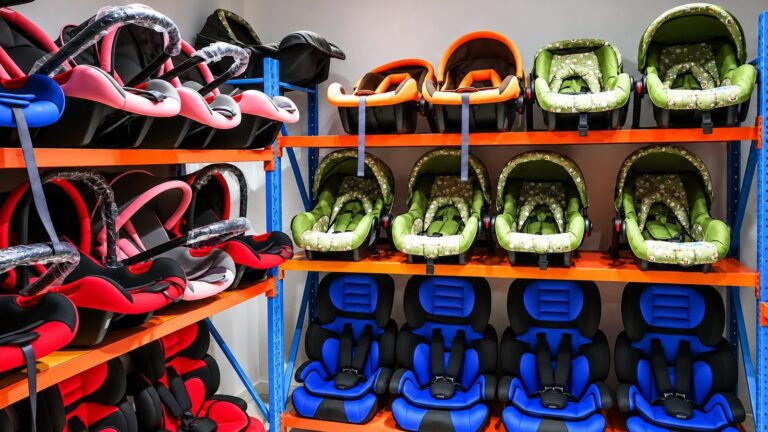
Short answer: R129 has no “Group 0+/1/2/3”. It sets stature limits per seat type, and products are built around them: infant carriers (max. 87 cm), harnessed seats rear- and forward-facing, booster seats from 100 cm and booster cushions from 125 cm.
The limits that shape every range
| Seat type | Limit | Paragraph |
|---|---|---|
| Infant carrier | Up to 87 cm maximum | §6.1.2.8 |
| Rear-facing seat for under-15-months | Must fit to at least 83 cm | §6.1.2.7(a) |
| Forward-facing harnessed seat | Not designed below 76 cm | §6.1.2.7(b) |
| ISOFIX harnessed seat | Seat + heaviest child ≤ 33 kg | §6.3.2.3 |
| Booster seat or cushion | Not below 100 cm; upper limit above 105 cm | §6.1.3.3 |
| Booster seat | Side protection up to 135 cm | §6.1.3.3 |
| Booster cushion | Not below 125 cm | §6.1.3.6 |
Every range must also be uninterrupted — no gap between, say, 130 and 140 cm (§6.1.3.3).
Three common paths
| Path | Seats | Good for | Trade-off |
|---|---|---|---|
| Three-step | Infant carrier → harnessed seat → high-back booster | Parents who want a portable carrier | Three purchases |
| Two-step | Convertible harnessed seat from birth → high-back booster | One car, no need to carry the baby in the seat | Not portable; must convert at the right moment |
| Long-use | Harnessed seat that converts to booster mode | Fewest purchases | Each mode must meet its own rules; ISOFIX harness mode limited by the 33 kg cap |
When to move to the next seat
- Move on when the child reaches the top of the stature range on the label, or — for harnessed seats — the maximum mass on the product (§4.3), whichever comes first.
- Do not move to forward-facing before 15 months, whatever the height (§6.1.2.7).
- Do not move to a booster below 100 cm, or to a backless cushion below 125 cm.
For brands: building a line-up
- Carrier + base: a module carries its own module mark per base and orientation (§5.4.3); plan bases as part of the approval.
- Convertibles must reach 83 cm rear-facing and carry the 15-month forward-facing warning (§14.2.10).
- Combined approvals are possible — for example an i-Size booster seat that continues as a specific vehicle booster seat — but boosters keep a single adult-belt route (§6.1.3.4).
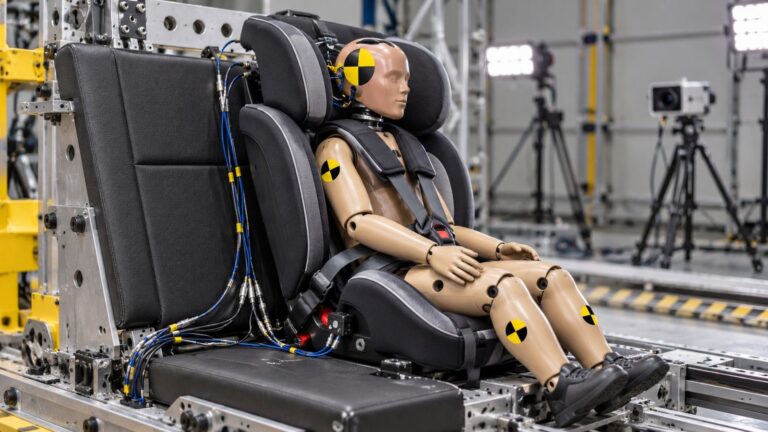
- Each mode is tested with the smallest and largest Q-dummy for its declared range (§7.1.3.6), so a wider range means more test configurations.
Check a height: R129 size checker. Full table: stature and size ranges.
Tell us the markets, price points and stature ranges you need. We manufacture R129 carriers, harnessed seats and boosters for brands and can suggest a range that covers them.
Are “Group 1” or “Stage 2” R129 terms?
No. Groups come from R44 and are based on weight. “Stages” are marketing terms. R129 seats are described by category and stature range, for example “i-Size booster seat 100–150 cm”.
Can one seat cover a child from birth to 12 years?
R129 allows any size range if every requirement is met across it (§2.8.2). In practice a single seat has to switch from harness to booster mode, and each mode must meet its own limits.
Guidance only. Check the authentic UN/ECE text and your Technical Service before relying on any requirement for approval.