Changing an R129-approved seat: modifications, extensions and re-testing
New fabric, a different buckle, a longer size range: brands change products all the time. Under R129 each change goes through the same path. Here it is.
Short answer: under R129, every modification of an approved seat must be notified to the Type Approval Authority that approved it (§11.1). The authority either accepts it as unlikely to have an appreciable adverse effect, or asks the Technical Service for a further test report. An extension is given its own series number and communicated to the other contracting parties (§11.2, §11.3).
The decision path
- Notify the authority of the change (§11.1).
- The authority decides that either:
- the change is unlikely to have an appreciable adverse effect and the seat still complies (§11.1.1); or
- a further test report is needed from the Technical Service (§11.1.2).
- If new tests are run, the horizontal head excursion is compared with the worst result recorded so far (§11.4):
- greater → new production qualification testing is required;
- less → no new production qualification.
What production qualification means
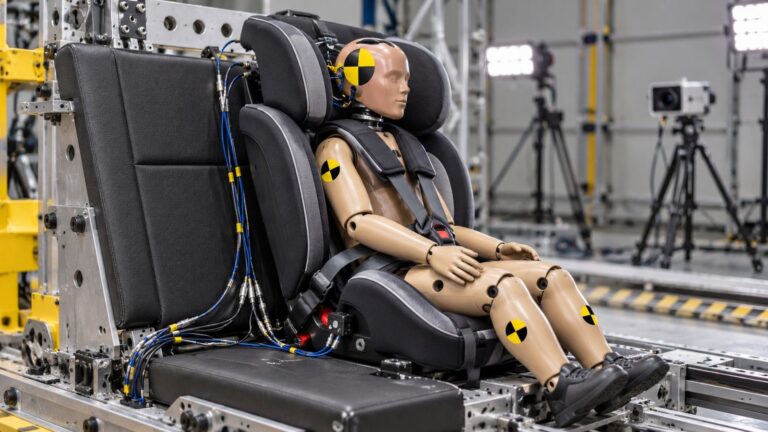
Production qualification is the test run on the production of each newly approved type (§9.2). For frontal and rear impact, five seats are tested under the conditions that gave the highest horizontal head excursion at approval (§9.2.1.1). Head excursion results must meet two conditions (§9.2.1.3.1):
- no single value above 1.05 × L, where L is the limit value; and
- mean plus standard deviation (X + S) not above L.
Markings and instructions are also checked by the Technical Service (§9.2.3). If an approval covers several modules, each module is qualified (§9.2).
Typical changes and what to expect
| Change | Likely route | Why |
|---|---|---|
| New colourway, same materials | Notification; authority decides | Still a modification under §11.1 |
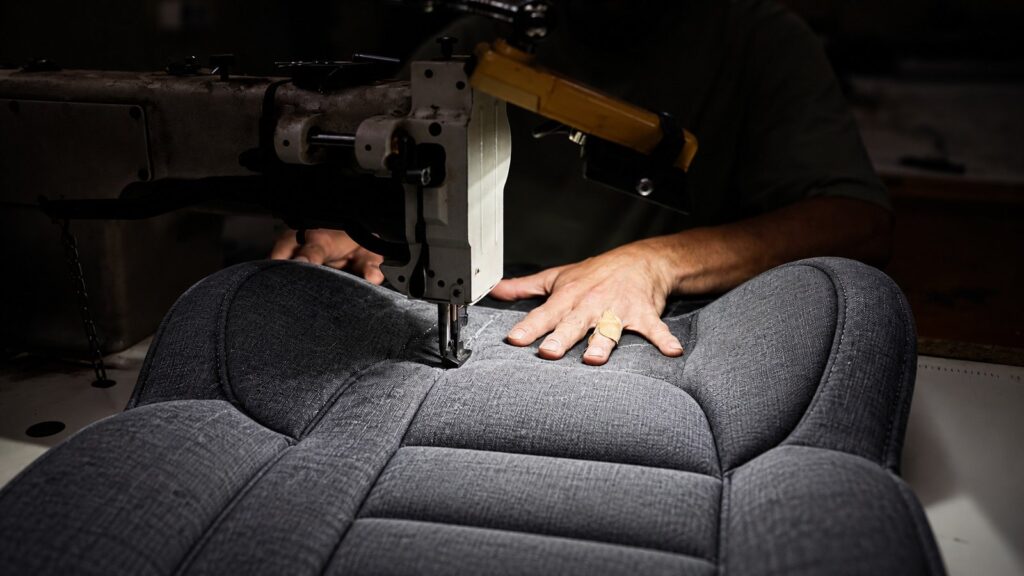
| New cover fabric or padding | Often a further test report | Covers are part of performance (§14.3.15.2); material rules apply (§6.3.1) |
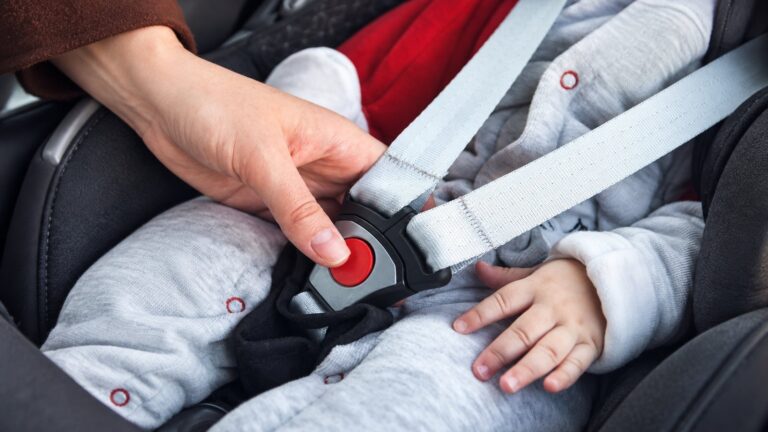
| Different buckle or adjuster | Further test report | Buckle and adjuster requirements (§6.7) |
| Extended stature range | Further tests with the dummies for the new range | Dummy selection follows the declared range (§7.1.3.6) |
| New instructions or labels | Notification and check | Markings (§4) and instructions (§14) are part of the approval |
The route is decided by the authority and Technical Service, not by the brand. Treat this table as a planning guide, not a promise.
Why it matters in OEM/ODM work
When a factory builds your brand’s seat, agree in the contract who notifies changes, who pays for extension tests, and how sub-supplier changes (foam, webbing, plastic resin) are reported. An approval may be withdrawn if seats do not conform to the type approved (§12.1).
Related: R129 type approval and conformity of production, CoP batch testing explained.
We handle product changes on R129 seats we build for brands. Tell us what you want to change and we will tell you what it means for the approval.
Does an extension change the approval number on the label?
The authority assigns a series number to the extension and informs the other contracting parties (§11.3). Ask your Technical Service how the extension is recorded for your product.
Can an 03-series approval still be extended?
After the transitional dates, parties keep accepting and granting extensions to earlier-series approvals only for seats not affected by the 04-series changes (§16.16). See the 04-series deadlines.
Guidance only. Check the authentic UN/ECE text and your Technical Service before relying on any requirement for approval.